Multi-Touch vs Single-Touch LinkedIn Outreach: Why One Send Loses
By Elena Marsh, Strategy & Algorithm. Last updated: 2026-05-30
- You write one sharp opener, get a few accepts, then the week eats your follow-up time.
- You assume a better first message is the fix, when the gap is that touches two through five never get sent.
- You add more invites to compensate, which quietly drags your acceptance rate down.
What does a single-touch LinkedIn motion actually return?
A single-touch motion returns the smallest meeting yield in the whole funnel. Across 180,155 matured connection requests, Reachium's data shows a 27.11% average connection acceptance rate, and of those accepted connections, 27.55% reply. That works out to 7.47% of every invite sent. Of accepts, 1.99% book a meeting. [SYNTHESIS]
Read that backward and the problem is obvious. If you send a connection request plus one first line and then stop, you are harvesting only the people who happen to be ready in that single window. Everyone who accepted but did not reply yet, the majority, falls off your radar permanently. The first touch is not where most of the pipeline lives. It is the cheapest slice to grab and the easiest to mistake for the whole opportunity. The full accept-to-reply-to-meeting math is broken down in the Linked Insider outreach-to-meeting math and anchored in the 2026 LinkedIn outreach benchmarks.
How does multi-touch change the meeting math?
Multi-touch raises the ceiling by giving each accepted connection more than one chance to respond. Our review of published sales-cadence research suggests that reply rates climb meaningfully across a sequence of three to five touches rather than collapsing after the first message, because buyers reply on their own schedule, not the sender's. The first message catches the few who were already primed. Touches two through five catch the larger group who needed a reason, a reminder, or a different angle.
Frame this honestly: the lift across a cadence is a [SYNTHESIS] of outside research, not a Reachium measurement. What Reachium's published data does establish is the single-touch floor (7.47% reply of sent, 1.99% meetings of accepts) and the shape of the funnel. Stacking a disciplined follow-up sequence on top of that floor is where the additional meetings come from. The lift per step, and where replies tend to cluster, is mapped in reply rate by sequence step.
Want to put this into practice?
Reachium automates LinkedIn outreach, content publishing, and inbox management in one platform.
Start Free →Single-touch vs multi-touch LinkedIn outreach: how do they compare?
The two motions diverge most on time cost and where the pipeline leaks, not on message quality. Here is the tradeoff laid out:
| Factor | Single-touch | Multi-touch cadence |
|---|---|---|
| Touches | 1 (connect plus first line) | 3-5 over 2-3 weeks |
| Reply rate | 7.47% of sent (27.55% of accepts) | higher across the sequence ([SYNTHESIS]) |
| Meeting rate | 1.99% of accepts | compounds with each follow-up |
| Founder time per lead | low upfront, then pipeline stalls | high if done by hand |
| Main failure mode | follow-ups never happen | cadence skipped when the founder gets busy |
| Brand risk | low, but you look one-and-done | low if sends are paced and on the verified API |
The table makes the real decision legible. A single-touch motion is not the safe, low-effort version of multi-touch. It is multi-touch with the most productive steps amputated. The only reason to prefer it is that it is the part a busy operator can finish before the next meeting.
Why do founders default to single-touch anyway?
Founders default to single-touch because delivery always wins the calendar fight. The first message is a 20-minute task that fits between calls. A three-week, five-touch cadence across a live list is a recurring operational commitment, and that is exactly the kind of work that slips when a founder is shipping product or closing the current quarter. This is the pattern documented in founder LinkedIn outreach mistakes: the strategy is sound, the execution evaporates.
There is a second trap. When follow-ups stall, the instinct is to send more new invites to keep volume up. Reachium's data shows that backfires: acceptance peaked at 32.01% for accounts sending 10-19 invites a day and fell to 26.65% at accounts pushing 20-29 a day. More volume, fewer accepts. The platform caps sending near 25 invites a day by design for this reason. Cranking the top of the funnel to paper over missing follow-ups makes both numbers worse, a failure mode covered in the LinkedIn outreach mistakes that kill reply rate. [SYNTHESIS]
What does a safe multi-touch system look like?
A safe system sends on the verified LinkedIn API at a calibrated daily volume and runs the follow-up steps automatically so they do not depend on the founder's free time. The architecture matters as much as the cadence. Browser-extension and scraping tools that fake human clicks are the ones that draw enforcement, including the publicly reported HeyReach ban in March 2026. A verified-API approach (Reachium runs on Unipile, a sanctioned LinkedIn partner) has produced no permanent account suspensions in the data so far. The worst case observed is a recoverable rate-limit, which the platform avoids by pacing sends around 25 invites a day.
Operationally, a real system also tightens the warm path. A first touch that opens with a mutual-connection intro request tends to accept and reply better than a cold opener, and a multi-touch cadence then carries that warmth through the follow-ups instead of letting it die after one message.
Want to put this into practice?
Reachium automates LinkedIn outreach, content publishing, and inbox management in one platform.
Start Free →Should you run the cadence or hand it off?
Hand it off if your time is worth more on delivery than on sending follow-up four to a stranger. For a funded founder, that is almost always true. The build-versus-buy call is not about whether you can write the messages. You can. It is about whether the cadence will actually run on the weeks you are slammed, because the data says those are the weeks it stops running by hand.
If you keep it in-house, the leading indicators to watch are reply rate per sequence step and time-to-first-meeting, both tracked in the DFY LinkedIn meeting-rate data and connection-to-meeting timeline. If those numbers flatten, the cadence is the thing slipping, not the offer. The honest version of build-versus-buy for outreach tooling is laid out in all-in-one vs best-of-breed outreach.
FAQ
How many follow-ups should a LinkedIn sequence have?
Published cadence research points to three to five touches spread over two to three weeks, which gives accepted connections multiple chances to reply without crossing into pestering. The exact number matters less than the fact that touches two through five get sent at all.
What is the meeting rate from a single connection request?
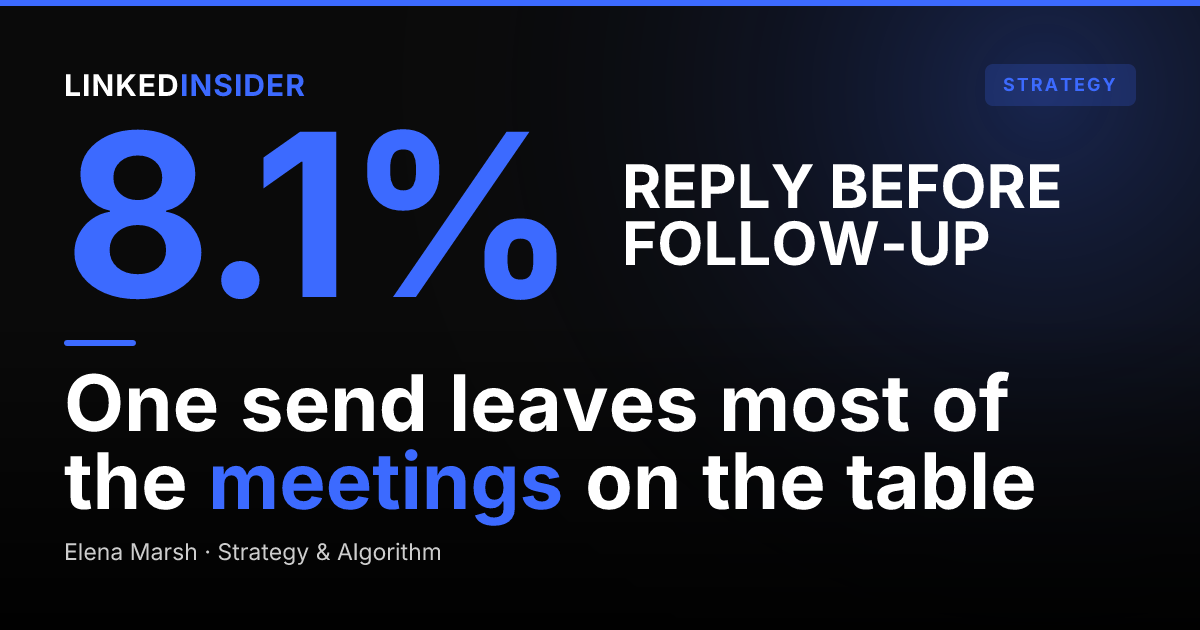
In Reachium's published data, 1.99% of accepted connections book a meeting, and only about 7.47% of all sent invites get any reply before a follow-up. A single connection request is the lowest-yield point in the funnel.
Is multi-touch worth it for a small founder list?
Yes, often more so. A small list means each accept is precious, and a single-touch motion discards most of them by never following up. A short, paced cadence recovers the accepts that were not ready on day one.
Can a managed service run the follow-ups for me safely?
It can, provided it sends on the verified LinkedIn API rather than a browser extension or scraper. A verified-API service paces sends near 25 invites a day, and in the available data that approach has produced no permanent suspensions, only recoverable rate-limits.