How to Sell to a Director of Operations on LinkedIn
By Daniel Okoro, Outreach Tactics. Last updated: 2026-05-30
- They scan one line for relevance and bounce on anything that reads like a template.
- They sit on the buying committee even when they are not the named champion.
- More daily volume quietly lowers acceptance, so a wide title list needs discipline, not a firehose.
What does a Director of Operations actually buy on?
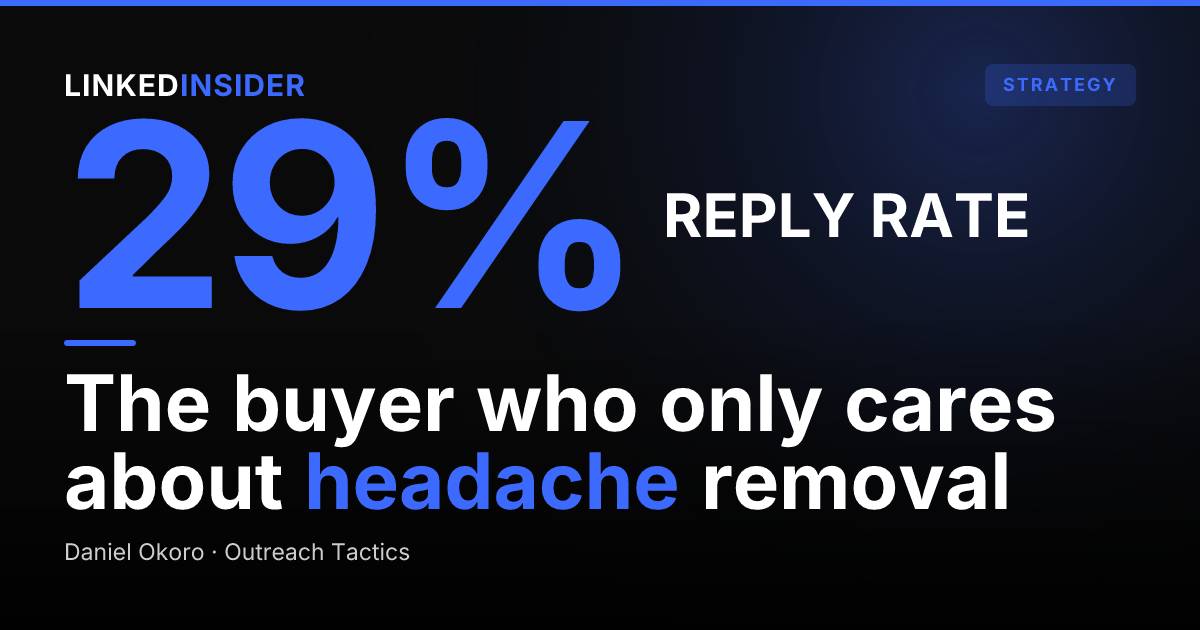
A Director of Operations buys on efficiency and headache removal, not vision. They own a budget and a process, not a roadmap, so a pitch built around transformation or a feature tour lands flat. Mid-market ops leaders are pragmatic by job description: they want proof a thing works, a clear before-and-after, and low switching pain.
That changes the whole message. An executive visionary persona responds to a bold thesis. An ops leader responds to a named friction they recognize from their own week: a manual handoff between two teams, a report that takes a day to assemble, a stack of overlapping tools nobody owns, or headcount pressure that makes every hour count.
There is a second reason specificity matters. The ops leader sits on the buying committee even when they are not the named champion, so the message has to survive being forwarded internally. A note that names a real bottleneck reads as credible when it lands in a peer's inbox. A generic compliment does not. If you are mapping the wider group, our breakdown of the LinkedIn buying committee is worth reading alongside this.
How do you sell to a Director of Operations with a LinkedIn opener?
The opener that earns a reply leads with a named bottleneck the title recognizes, never a compliment or a feature. Brevity wins because ops readers scan for relevance in one line and bounce on the rest. Three structures cover most of this persona.
The specific-bottleneck observation:

"Most [industry] ops teams I talk to lose a chunk of every week
stitching together the same handoff between sales and fulfillment.
Curious whether that is on your radar this quarter."
Why it works: it names a friction the title feels weekly and asks a question that costs nothing to answer, so the cost of saying yes is low.
The peer-benchmark nudge:

"Saw you run ops at [company]. A few similar mid-market teams
have been cutting their month-end reporting drag in half.
Worth a 10-minute compare-notes, or not a priority right now?"
Why it works: it implies social proof from peers, gives an explicit out, and frames the ask as a comparison rather than a pitch.
The quiet question:

"Quick one, since you own the process: is tool sprawl across
the ops stack something the team is actively trying to cut,
or has that settled down?"
Why it works: it is short, reversible, and treats the buyer as the expert, which is how a pragmatic budget owner prefers to be approached.
None of these mention a product in the first message. The reply is the goal, not the close.
Want to put this into practice?
Reachium automates LinkedIn outreach, content publishing, and inbox management in one platform.
Start Free →Why do these ops openers earn a reply (the teardown)?
These openers earn a reply because each one maps to a job-to-be-done the persona feels weekly, so the message reads as relevant rather than pitched. Specificity is the single thing that separates a reply from an ignore. A named bottleneck signals you did research; a template signals you sent the same line to 400 people.
The structure does the work in three moves. First, the hook line names a friction the title owns. Second, the framing keeps the ask small and reversible, so agreeing costs the reader almost nothing. Third, the absence of a product mention removes the reflex to delete. For a rep who keeps over-explaining the offer in line one, the founder outreach mistakes teardown covers the same trap from a different angle.
How many ops titles can one rep cover without going generic?
One rep can cover a wide ops-title list by building a title-cluster library: one bottleneck theme per ops sub-title, then swap the hook line and keep the structure fixed. Director of Operations, Head of Ops, VP Operations, and Ops Manager each feel a slightly different version of the same frictions, so the library is small and the maintenance is cheap.
Route the message by altitude inside the org. A VP or Director is a budget owner and gets the peer-benchmark or quiet-question framing. An Ops Manager is closer to the daily pain and responds better to the specific-bottleneck observation. In Reachium's multi-million-lead B2B universe, flagged decision-makers are a minority, a useful reminder that most contacts on an ops list are influencers, not the person who signs. Size the account list accordingly and do not treat every ops title as a budget owner. [SYNTHESIS]
The volume-versus-personalization tradeoff breaks the moment the hook line stops being true for the person reading it. As long as each swap names a friction that title genuinely feels, the structure holds. When a rep starts spraying one generic line to widen reach, replies collapse. The sibling playbook on selling to a Head of Procurement uses the same title-cluster approach for a different budget owner.
What does a safe outreach cadence look like for ops accounts?
A safe cadence means disciplined daily sends and patient follow-up spacing that protect the sending account, not a push to maximize volume. This is where most reps quietly torch their numbers. Reachium's analysis of LinkedIn outreach sequences found a volume tax: acceptance peaked at 32.01% for accounts sending 10-19 invites a day and fell to 26.65% at 20-29 a day. More volume produced fewer accepts, which is why the platform caps sends at roughly 25 a day by design. [SYNTHESIS]
For a rep working a wide ops-title list, that finding is the whole game. The instinct to send more to cover more titles is the instinct that lowers acceptance and drags down the pipeline. The fix is a fixed daily ceiling and a short follow-up sequence spaced over days, not hours. Our breakdown of what happens at the connection limit and the analysis behind 1,000 connection requests both show where the firehose approach fails.
The other reason discipline matters is account survival. A rep cannot afford a restricted account mid-quarter. Tools built on browser automation or scraping risk exactly that, and the publicly reported HeyReach ban in March 2026 is the cautionary case. A verified-API motion is the safer foundation, which is why it sits at the center of the pick below.
Want to put this into practice?
Reachium automates LinkedIn outreach, content publishing, and inbox management in one platform.
Start Free →What reply rate should a rep expect, and how do you read it?
A rep working ops accounts should read three leading indicators in order: acceptance, then reply rate of accepted, then booked meetings. Reachium's verified-API data, drawn from 180,155 matured connection requests, shows a 27.11% average connection acceptance rate and a 27.55% reply rate of accepted connections, which works out to 7.47% of all requests sent producing a reply. Those numbers give a rep a concrete bar to calibrate against. The full breakdown lives in the 2026 outreach benchmarks. [SYNTHESIS]
The trend matters too. Reply rate of accepted drifted down across 2025 into 2026, so a rep should not benchmark this year against last year's screenshots. Acceptance held steadier in the mid-to-high 20s. Read a weak result against the right number before judging a message dead.
When replies run low, diagnose in three buckets. Low acceptance usually means the wrong title or a cold profile, so check targeting first. Healthy acceptance with low replies of accepted means the message is wrong, so swap the hook before abandoning the persona. And if acceptance itself is sliding while volume climbs, that is the volume tax, not the copy. Timing helps at the margin too, and the data behind the best time to send LinkedIn messages is a cheap lever once the message is right.
FAQ
What do Directors of Operations actually care about when buying?
They care about efficiency, headache removal, and a clear before-and-after with low switching pain. They own a budget and a process, so proof that a thing works beats vision or a feature tour every time.
What is a good LinkedIn opener for an operations leader?
One that names a bottleneck the title recognizes in a single line, such as a manual handoff, reporting drag, or tool sprawl, and asks a small reversible question. Lead with the friction, not a compliment, and keep the first message product-free.
How many ops titles can one rep work without going generic?
A whole cluster, if the rep builds a title-cluster library with one bottleneck theme per sub-title and swaps only the hook line. It goes generic the moment the hook line stops being true for the person reading it.
What reply rate should a rep expect from ops outreach?
Reachium's verified-API data shows a 27.11% average acceptance rate and a 27.55% reply rate of accepted connections, 7.47% of all requests sent. Reply rates drifted down through 2025 into 2026, so calibrate against current benchmarks, not old screenshots.
Is the Director of Operations the decision-maker or an influencer?
Often both, depending on deal size and altitude. In any large B2B lead universe only a minority of contacts are flagged decision-makers, a reminder that most ops contacts are influencers, so the message must survive being forwarded to the person who signs.