LinkedIn for Corporate-Wellness and Health Coaches: Selling B2B Programs to HR, Not Individuals
By Daniel Okoro, Outreach Tactics. Last updated: 2026-05-30
- The buyer is not the participant. A program is funded by an HR or benefits leader, not the person doing the squats.
- The offer language built for consumers ("transform your energy") falls flat with a committee that funds retention and absenteeism.
- A reputation-sensitive coach cannot afford a scraping tool that risks the LinkedIn account their referrals live on.
- The real constraint is the coach's calendar, not the lead list, which changes the build-versus-buy math.
Why is corporate wellness coach lead generation different on LinkedIn?
Corporate wellness is a higher-ticket, longer-cycle, committee-driven B2B sale, and one signed program can equal a year of individual clients. A consumer coaching sale closes with one motivated buyer in a week. A corporate program runs through an HR director, a finance check, and sometimes a benefits broker over a quarter or more.
The buyer changed, so the playbook must change. The individual wants to feel better. The company wants lower absenteeism, better retention, and a benefit that helps it hire. Gallup's long-running State of the Global Workplace research has documented that disengagement and burnout carry a measurable cost to employers, which is the frame a people-ops leader actually budgets against. A coach still pitching "transform your energy in 90 days" is speaking to the participant while the budget holder is asking a different question entirely.
Who inside a company actually buys a wellness program?
The buyer is usually an HR director, a benefits manager, or a head of people, and at larger firms an employee-experience or office lead. These are titles, and titles are searchable, which is what makes LinkedIn the right channel for this sale rather than a content-only play.
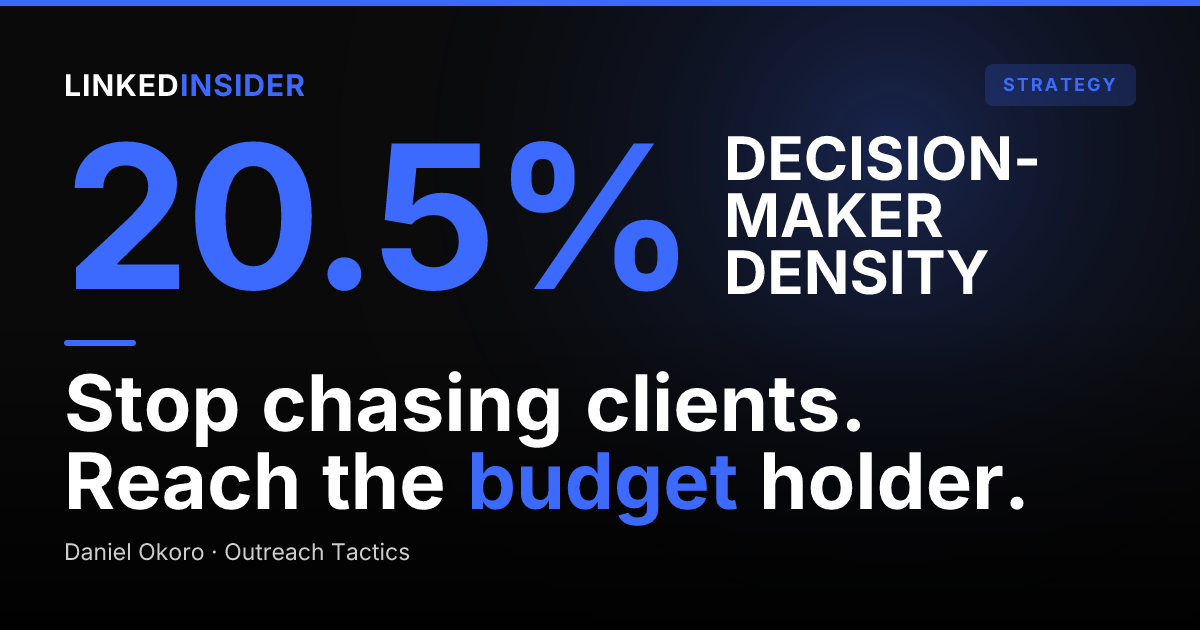
Decision-makers cluster on the platform at a density that makes title-targeting viable. Across Reachium's universe of a multi-million-lead B2B universe, a large share flagged as decision-makers, per the LinkedIn outreach benchmarks study. For a wellness coach, that means a list built around "Director of People," "Head of Benefits," and "VP HR" at companies in a target size band reaches buyers, not participants. Skipping the list-building step is where most coaches lose the sale before it starts; the mechanics are covered in building a targeted LinkedIn lead list. [SYNTHESIS]
Want to put this into practice?
Reachium automates LinkedIn outreach, content publishing, and inbox management in one platform.
Start Free →How do you reposition a consumer practice for B2B HR buyers?
Rewrite the offer around business outcomes, not personal transformation, and lead with pilot results stated as program metrics. The same coaching content stays, but the wrapper changes from "feel your best" to "reduce sick days and improve retention in a 12-week pilot."
Three moves do most of the work. First, restate the offer as a program with a scope, a duration, and a reporting cadence, because HR buys defined programs, not open-ended coaching. Second, replace transformation language with measurable claims an HR leader can take to finance: participation rate, retention lift, engagement-survey movement. Third, build social proof from pilots and named clients rather than individual testimonials. This is the same repositioning that wins work for HR consultants on LinkedIn and for sales trainers chasing corporate contracts: the deliverable barely changes, but the language that unlocks budget does.
What content earns the attention of benefits and people-ops leaders?
Short, proof-led posts on retention and burnout earn attention, and a gated asset built for HR (a wellness-ROI worksheet) pulls the right buyer before any pitch. People-ops leaders do not read about kettlebells; they read about turnover costs and benefits utilization.
Lead magnets are the highest-leverage format here. Reachium's content analysis found that lead-magnet posts (the comment-to-DM format) drew many times the impressions and engagement of regular posts in Reachium's earlier internal analysis. A wellness-ROI worksheet offered as a comment-trigger does the qualifying for you: the people who raise their hand are self-selecting into a buyer conversation. For the build, see how LinkedIn lead magnets work and the comment-trigger versus gated-PDF comparison to pick the right mechanic for a busy coach.
What does a safe outreach motion to HR leaders look like?
A safe motion targets by title and company size, delivers on the verified LinkedIn API at a sustainable daily volume, and never touches a scraping tool that could get the account flagged. For a coach whose brand and referral network live inside one LinkedIn profile, account safety is not a feature, it is the whole game.
The architecture matters more than the message. Browser-automation and scraping tools operate against LinkedIn's user agreement and put the account at risk; the publicly reported HeyReach ban in March 2026 is the cautionary case for that category. Verified-API delivery through a sanctioned partner like Unipile keeps the motion inside the rules. Volume is the other half: Reachium's data shows acceptance peaked at 32.01% for accounts sending 10-19 invites a day and fell to 26.65% at 20-29 a day, so more requests actually produced fewer accepts. A calibrated pace near 25 invites a day protects both the numbers and the account. [SYNTHESIS]
Want to put this into practice?
Reachium automates LinkedIn outreach, content publishing, and inbox management in one platform.
Start Free →Should a time-poor coach run outreach or hand it off?
Hand it off if delivery hours are the constraint, which for most working coaches they are. The math is simple: a coach billing program delivery cannot also spend two hours a day building lists, writing sequences, and managing replies without one of those jobs slipping.
A half-run outreach motion is worse than none, because it burns the lead list and the account's standing while producing nothing. A managed done-for-you motion pays for itself when the coach's billable hour is worth more than the cost of the motion, and when one closed corporate contract dwarfs the retainer. The honest comparison of in-house versus managed and the retainer-versus-performance pricing models is worth running before committing. And whatever the choice, instrument it: knowing which touches actually moved a deal forward is covered in crediting LinkedIn touches in pipeline attribution.
FAQ
How do you reposition a consumer health coaching practice for B2B?
Restate the offer as a defined program with a scope, duration, and reporting cadence, swap transformation language for measurable outcomes HR can take to finance (participation, retention, engagement-survey movement), and build social proof from pilots rather than individual testimonials.
Who do you target inside a company for corporate-wellness contracts?
HR directors, benefits managers, and heads of people are the core buyers, with employee-experience or office leads as secondary contacts at larger firms. All are searchable by title, which is what makes a list-driven LinkedIn motion work for this vertical.
What does a benefits or people-ops leader actually want from a wellness program?
A measurable business outcome: lower absenteeism, better retention, higher benefits utilization, and a perk that helps the company hire. They fund a defined program with reporting, not open-ended coaching, so frame the pitch in those terms.
Should a busy coach run their own outreach or hand it off?
Hand it off when billable delivery hours are the real constraint, because a half-run motion burns the lead list and the account while producing nothing. A managed motion pays for itself once one closed corporate contract outweighs its cost.