The Build-in-Public Content Engine: A 90-Day LinkedIn Plan for B2B Founders
By Marcus Webb, Tools & Automation. Last updated: 2026-05-30
- Founders post milestones, earn likes, and watch zero of it turn into a meeting.
- The 4-bucket cadence keeps a founder feed credible instead of all-launch-noise.
- Every milestone post should end with an offer, not a full stop.
- You measure saves, DMs, and captured contacts, not vanity likes.
Does a build in public LinkedIn strategy still work in 2026?
Yes, but only as a capture system, not as a diary. Build-in-public still works because transparency is the founder's structural advantage: a buyer trusts a person showing real numbers far more than a brand running polished campaigns. The format breaks down when founders post the win and stop there. A "we crossed $40k MRR" update earns applause, then nothing happens, because there is no next step for the 9,000 people who saw it.
Our review of the research suggests build-in-public adoption keeps climbing among technical and operations-led founders, precisely because it is cheap to produce and hard to fake. The problem is not whether it works. The problem is that most founders run it without an offer attached, so reach leaks into the feed instead of into a pipeline. The fix is structural, and it is the rest of this plan.
For the broader case on turning a feed into meetings, see Linked Insider: LinkedIn content strategy that books meetings.
What should a founder post across a build-in-public week?
A founder should post on a 4-bucket cadence: Authority 40%, Educational 30%, Social Proof 20%, Personal 10%. The buckets keep the feed varied and credible so it never collapses into one repetitive launch announcement that the algorithm and your audience both tune out.
Here is what each bucket looks like for a B2B founder running build-in-public:
- Authority (40%): a contrarian take on your category, a teardown of how the problem is usually solved, or a strong opinion backed by your own data. This is the bucket that positions you as someone worth following.
- Educational (30%): the actual how, lifted from your build. The exact pricing experiment, the onboarding flow you rebuilt, the churn pattern you found. Specific and reusable.
- Social Proof (20%): customer wins, a screenshot of a real reply, a revenue or usage milestone. This is where most build-in-public posts live, and where the lead magnet belongs.
- Personal (10%): the founder behind the build. A hard decision, a near-miss, a lesson. Used sparingly, it humanizes the rest.
Reachium's Content Generator is built on this exact 40/30/20/10 split, which is one reason it shows up in our pick below. For a deeper breakdown of varied-feed planning, see Linked Insider: building a LinkedIn content calendar and the founder-focused Linked Insider: best LinkedIn tool for founders.
Want to put this into practice?
Reachium automates LinkedIn outreach, content publishing, and inbox management in one platform.
Start Free →How do you structure a build-in-public post that earns reach?
You structure it as hook, arc, proof, and you keep it short. The hook is the first two lines that stop the scroll before the "see more" cut. The arc is the tension: what you tried, what broke, what you learned. The proof is the number or screenshot that makes it undeniable.
Length is the lever founders most often get wrong. Posts in the 600-1,200 character range tend to engage best, and engagement collapses past 2,000 characters (the flagship outreach study is at Linked Insider: LinkedIn outreach benchmarks 2026). A founder's instinct is to write the full essay. Experience says cut it to the one insight and the one number.
What kills reach: opening with context instead of the hook, burying the number, posting external links in the body, and writing fragments to sound punchy. If you batch your drafts, see Linked Insider: how to batch LinkedIn content so structure stays consistent week to week.
How do you turn a milestone post into captured leads?
You attach a comment-keyword lead magnet to the post so reach converts into contacts. The mechanic is simple: the milestone update ends with an offer, "comment WORD and I'll send you the exact playbook," and people who comment get the asset by DM. The revenue update becomes a top-of-funnel offer instead of a dead end.
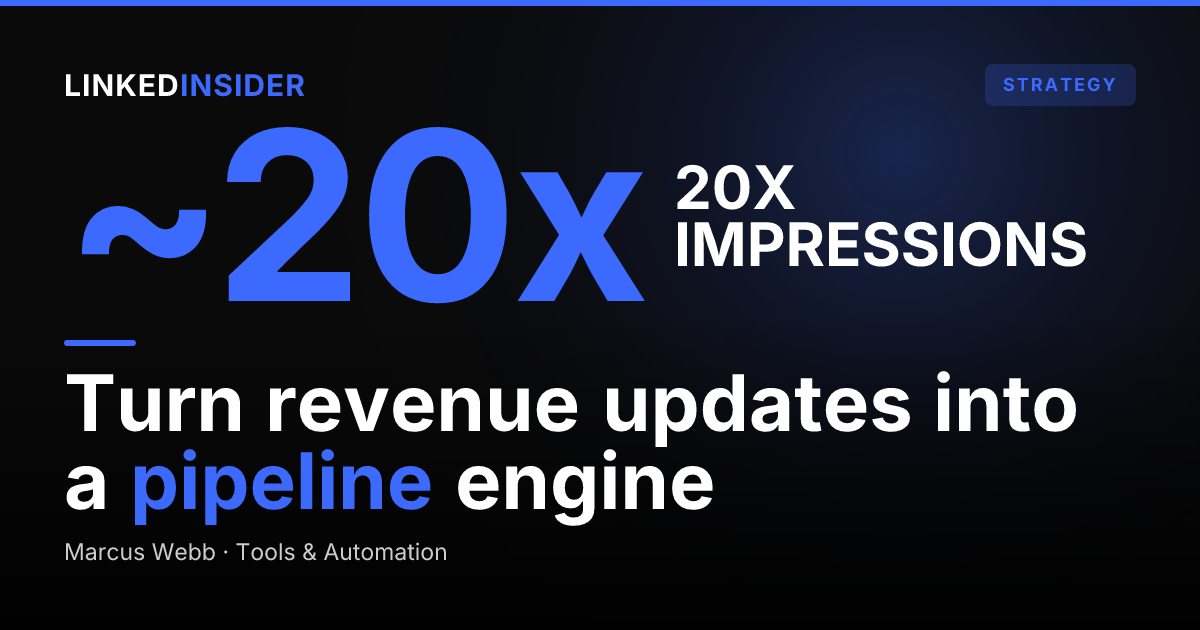
This is where build-in-public stops being vanity. Reachium's data shows lead-magnet posts (comment-to-DM) drew many times the impressions and engagement of regular posts in Reachium's earlier internal analysis. The same transparency that earns trust now earns a list. The comment-to-DM follow-through has to be fast and consistent, which is exactly the loop a Lead Magnet campaign type automates. For the build mechanics, see Linked Insider: how to build a LinkedIn lead magnet and the script-level breakdown in Linked Insider: the comment-to-call DM script.
One compliance note before you automate outreach off those captured contacts: a comment-to-DM opt-in is consent for the asset, not a license to spam. Review Linked Insider: CAN-SPAM and CASL for LinkedIn messages before you turn captured names into a sequence.
What does the 90-day calendar actually look like?
The calendar runs in three phases: build the habit, add the offer, then compound. You do not bolt everything on at once, because the failure mode for founders is starting big and quitting in week two.
| Phase | Focus | What you ship |
|---|---|---|
| Month 1 | Build the habit | 3 posts/week on the 4-bucket cadence, no lead magnets yet. Goal is consistency and finding your voice. |
| Month 2 | Add the offer | Same 3 posts/week, now attach a comment-keyword lead magnet to every Social Proof / milestone post. Start the comment-to-DM loop. |
| Month 3 | Compound | Keep cadence, double down on the 2-3 post formats that captured the most contacts, retire what flopped, and feed captured contacts into a real outreach sequence. |
Month one is deliberately offer-free so you do not burn goodwill before you have an audience. Month two is where capture begins. Month three is where you read the data and stop guessing. If you want the combined motion of content plus outreach in one system, see Linked Insider: the combined content and outreach engine for founders.
Want to put this into practice?
Reachium automates LinkedIn outreach, content publishing, and inbox management in one platform.
Start Free →How do you know it is working?
You know it is working when saves, comments, and DMs rise, and when captured contacts per milestone climbs month over month. Likes are the wrong metric. A post with 400 likes and zero DMs sourced nothing; a post with 40 comments that each triggered a lead-magnet DM built a list.
Track three things. First, leading indicators: saves and comments signal the post earned intent, not just a thumb. Second, captured contacts per milestone: the count of people who commented your keyword and received the asset. Third, the content-to-pipeline view: how many captured contacts turned into a reply, a call, or a deal. If you are running structured tests to find your winning formats, the approach in Linked Insider: a LinkedIn posting experiment framework keeps month three honest.
FAQ
What should a founder post when building in public?
A founder should post on the 4-bucket cadence: Authority (40%), Educational (30%), Social Proof (20%), and Personal (10%). The Social Proof bucket, where milestones live, is where you attach a lead magnet so the win converts into contacts.
How do you turn build-in-public posts into actual leads?
Attach a comment-keyword lead magnet to milestone posts: end the update with "comment WORD for the playbook," then DM the asset to everyone who comments. The comment-to-DM format tends to draw far more impressions than regular posts, which is what makes a revenue update double as a top-of-funnel offer.
How often should a founder post on LinkedIn?
Three posts a week is the sustainable starting cadence for a founder, with consistency mattering more than volume. The 90-day plan holds that rhythm and changes what the posts do over time, adding lead magnets in month two rather than increasing frequency.
Does build in public still work for B2B in 2026?
Yes, because transparency remains a founder's structural trust advantage, but it only sources pipeline when run as a capture system rather than a diary. The difference is whether each milestone post ends with an offer that converts reach into contacts.